You spent weeks choosing the perfect curtains. The fabric is right, the colour works beautifully with your walls, and the length is exactly what you wanted. Then comes the part most people underestimate — actually getting them up on the wall properly.
In Dubai, this step is trickier than it looks. Gypsum walls, floor-to-ceiling windows, heavy blackout linings, and double-layer setups all change what you need and how it should be installed. Get it wrong and you end up with drooping curtains, pulled-out brackets, or worse — holes in your walls that cost you your security deposit.
Total Home Fixing has work on curtain rods installation across hundreds of Dubai villas and apartments. This guide covers everything you need to know before buying a single bracket or drilling a single hole — from choosing the right rod type to understanding exactly what goes into a proper, lasting installation.
Why Rod Choice Matters
Most people treat the rod as an afterthought — something you grab quickly before the curtains arrive. In reality, the rod you choose determines how long your curtains last, how smoothly they operate, and whether the whole setup stays secure on your wall for years or starts sagging within months.
In Dubai homes specifically, a few things make this decision more important than in other countries. First, the sheer scale of windows. Dubai villas and modern apartments tend to have large, wide windows — sometimes spanning three to four metres — that require rods with proper mid-span support brackets, not just two end brackets. Second, the popularity of double-layer curtain setups, combining sheer and blackout fabric, means the rod needs to carry significantly more weight than a simple single panel. Third, Dubai’s humidity fluctuations — from the dry desert heat outdoors to the heavily air-conditioned interiors — cause metal and wooden rods to expand and contract, which matters for fit and finish over time.
Choosing the right rod from the start saves you from reinstallation calls six months later.
Types of Curtain Rods
Understanding the main types available in Dubai helps you match the right solution to each room and window:
Standard Single Rods
The most common type, used for a single curtain panel or pair. Available in aluminium, steel, and wood finishes. They work well for lightweight to medium-weight fabrics in bedrooms, studies, and smaller windows. For spans wider than 2 metres, always specify a rod with a middle support bracket to prevent bowing in the centre.
Double Curtain Rods
Double rods are the go-to solution for layered curtain setups — sheer panels at the front, blackout or heavier drapes behind. They are extremely popular in Dubai because the combination of sheer and blackout is practical year-round: sheers filter the intense daylight while blackouts block it entirely when needed. A quality double rod setup carries significantly more weight, so the brackets and wall fixings need to be rated accordingly.
Traverse & Track Rods
Traverse and track systems use a cord or baton mechanism to open and close curtains without touching the fabric. These are ideal for floor-to-ceiling curtains in large living areas and master bedrooms, where reaching across a wide span would be awkward. Track systems can also be ceiling-mounted, which gives them a clean, modern look that many contemporary Dubai interiors favour.
Tension Rods
Tension rods require no drilling at all — they hold themselves in place with spring pressure against the window frame or wall. These are an excellent option for rented apartments where drilling is restricted, or for lightweight net curtains and voiles in bathrooms and small windows. They are not suitable for heavy fabrics or wide spans.
Ceiling-Mounted Rods
Ceiling-mounted tracks are growing in popularity across Dubai’s newer villa developments and renovated apartments. When the rod or track is fixed to the ceiling rather than the wall, curtains hang from ceiling to floor in an unbroken line, making rooms feel taller and more elegant. This look works particularly well with velvet and linen fabrics in living rooms and master bedrooms. Ceiling installation requires accurate measuring and solid fixings into the ceiling slab or solid timber within the ceiling build-up.
Curtain Rod Holders Explained
Curtain rod holders — the brackets that anchor your rod to the wall or ceiling — are the most overlooked part of the entire setup. Yet they are the component that everything depends on. A beautiful rod installed with undersized or incorrectly fixed curtain rod holders will pull out of the wall within weeks, especially with heavy fabrics.
Wall Bracket Holders
Standard wall bracket holders are the most widely used type across Dubai homes. They mount to the wall with screws and anchors and hold the rod at a fixed projection from the wall surface. The key variable is the projection distance — how far the rod sits from the wall — which determines whether your curtains hang freely or drag against the wall as they open. For single panels, a 7 to 10cm projection is usually sufficient. For double curtain rod holders with two layers of fabric, a projection of 12 to 16cm gives the clearance needed.
Ceiling Bracket Holders
Ceiling bracket holders drop down from the ceiling and suspend the rod or track below. These curtain rod holders need to fix into solid material above — either a concrete slab, a timber batten, or a dedicated ceiling fixing strip. In Dubai apartments, ceilings are often gypsum board with air gaps above, which means a professional needs to locate and fix into the slab properly rather than just screwing into the gypsum skin.
Double Bracket Holders
Double bracket holders carry both the sheer and blackout rod simultaneously, staggered at different projections from the wall. Quality double curtain rod holders are built from heavier gauge steel than single brackets and are designed for the combined weight of two curtain layers. When buying, always check the weight rating — for floor-to-ceiling velvet with a sheer lining, you want brackets rated for at least 15 to 20kg per bracket.
How to Choose the Right Holder
Match the bracket to the wall type and curtain weight. For concrete walls, standard plastic plug anchors work well. For gypsum walls — which are found in the majority of Dubai apartments and many villa interior partition walls — you need specialist cavity anchors or, ideally, fixings located into the steel stud frame behind the board. This is why many homeowners rely on professional renovation services in Dubai to ensure installations are done safely and according to the correct wall structure. A professional installer knows the difference and will never use a standard plug in a gypsum wall for a heavy curtain load.
Curtain Rods — Wall Type Guide
Dubai homes have three common wall types, and each needs a different installation approach. This is the section most online guides skip — and it is exactly why so many self-installed curtains end up pulling off the wall.
Installing on Gypsum Walls
Gypsum board walls are hollow — there is an air cavity behind the plasterboard skin. A standard screw into gypsum alone will not hold any meaningful weight. The correct approach is either to use toggle anchors or cavity anchors rated for the load, or — the better option — to locate the steel stud behind the board with a stud finder and screw directly into it. For heavy curtains, our team always aims for stud fixings rather than cavity anchors alone.
Installing on Concrete Walls
Concrete walls are the most forgiving surface for curtain installation. A proper masonry drill bit, the right size plastic anchor, and a good quality screw give you a fixing that will hold heavy drapes without any concern. The main risk with concrete is hitting a rebar or conduit during drilling — which is why a professional always checks before drilling near electrical sockets or service runs.
Installing on Tiled Walls
Tiled walls in bathrooms or kitchen areas require diamond-tipped drill bits and slow, steady drilling to avoid cracking the tile surface. This is the most technically demanding surface type and the one where DIY attempts most commonly go wrong. A cracked tile is an expensive mistake in a Dubai bathroom. For bathroom curtain rod installation over tiles, always use a professional.
Room-by-Room Rod Guide
Different rooms have different needs. Here is how to think about curtain rod selection for each main area of a Dubai home:
Living Room Rods
Living rooms in Dubai villas and apartments often have the widest windows and the most demanding aesthetic requirements. This is where ceiling-mounted tracks or premium decorative rods make the biggest visual impact. For spans over 3 metres, use a rod with at least one mid-span support bracket. Double rod setups for sheer and blackout are popular and practical — Dubai’s east-facing living rooms get intense morning sun that even quality sheers cannot fully manage alone.
Bedroom Curtain Rods
Master bedrooms almost always benefit from a blackout solution, which usually means a double rod setup or a deep-return single rod that allows the curtain to wrap the window and block light from the sides. In children’s rooms, simplicity and durability matter more than aesthetics — a solid single rod with robust holders is usually the right call.
Bathroom Rods
Bathroom curtain rods installation requirements are entirely different from the rest of the home. Tension rods are the most practical choice for shower curtains — no drilling into tiles, easy to remove for cleaning, and quick to replace when the curtain changes. For a window curtain in a bathroom, use a moisture-resistant aluminium or stainless steel rod rather than anything with a painted or wooden finish that will deteriorate in the humidity.
Curtain Rods Installation Cost
Understanding what professional curtain rods installation costs in Dubai helps you budget realistically and compare quotes fairly. Prices vary depending on the number of windows, wall type, rod type, and whether you are supplying the hardware or asking the installer to source it.
For a standard single rod installation on a concrete wall — measuring, drilling, fitting brackets, and hanging the curtain — professional rates in Dubai typically range from AED 100 to AED 150 per window. Double rod setups, which require more precise alignment and heavier bracket installation, usually cost AED 180 to AED 250 per window. Ceiling-mounted track installations are priced differently, typically starting from AED 200 per window, with the total depending on track length and complexity.
For a typical two-bedroom Dubai apartment with five to six windows, a full professional installation including all curtain rods runs between AED 700 and AED 1,500 depending on the choices made. For a villa with twelve to fifteen windows across multiple floors and room types, expect to budget between AED 1,800 and AED 3,500 for professional installation alone, before hardware costs.
Always ask whether the quote includes measuring, hardware supply, installation, and any patching of previous holes. These variables make a significant difference to the final number.
DIY vs Professional Installation
The honest truth is that curtain rods installation looks straightforward but has more ways to go wrong than most home tasks. For a single tension rod in a bathroom or a lightweight net curtain over a small window, a careful DIY approach is perfectly reasonable.
For anything involving gypsum walls, heavy blackout fabrics, double rods, ceiling mounts, or floor-to-ceiling panels — professional installation pays for itself. The cost of re-drilling, filling, repainting, and restarting after a failed attempt almost always exceeds the cost of calling a professional in the first place. And if you are in a rented property, a failed self-installation that damages walls can cost you far more than your security deposit covers.
Home maintenance company’s installation teams come with all the necessary tools — laser levels, stud finders, appropriate drill bits for every wall type, and the experience to spot problems before they happen. The job is done once, done correctly, and done cleanly.
Common Installation Mistakes
These are the errors we see most often when called in to fix or redo a curtain rods installation in Dubai:
- Using standard plastic plugs in gypsum walls — they pull straight out under any real load. Always use cavity anchors or stud fixings.
- Mounting brackets too close to the window frame — curtains need clearance to open fully past the window edge, ideally 15 to 20cm beyond each side of the glass.
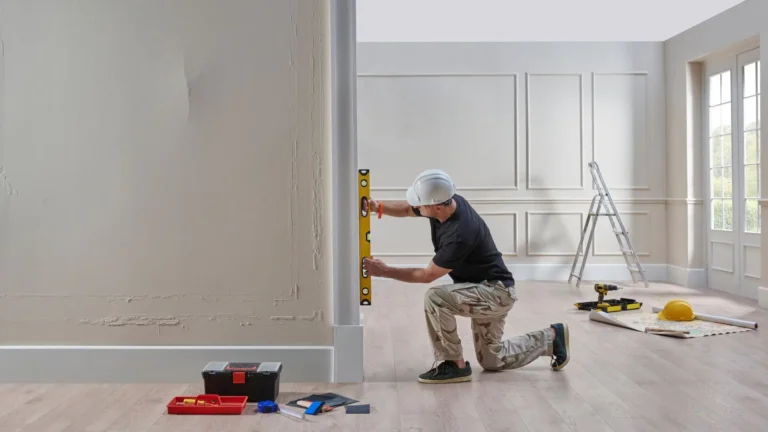
- Not using a level — even a few millimetres of misalignment between brackets becomes very obvious once the curtain is hanging. Always use a spirit level or laser level across all brackets before drilling.
- Undersized brackets for the rod weight — particularly common with double setups where the combined fabric weight is much heavier than anticipated.
- Skipping the mid-span bracket on wide windows — without a centre support, rods over 2 metres bow noticeably in the middle, straining both brackets and causing uneven curtain hang.
- Drilling without checking for hidden cables or pipes — particularly important above window frames where electrical conduits often run.
Why Choose Total Fixing?
Total fixing is a Dubai-based home maintenance services company with a dedicated installation team that handles curtain rods installations across villas, apartments, and commercial properties every week. We bring laser levels, stud finders, the correct anchors for every wall type, and clean-finish drilling that leaves your walls looking exactly as intended.
We cover every type of curtain rods installation — single, double, ceiling-mounted, traverse tracks, and tension rod setups across all room types. We work on gypsum, concrete, and tiled surfaces, and we always assess the wall type before a single hole is drilled.
Whether you need one bathroom tension rod fitted or a full villa of fifteen windows installed from scratch, our pricing is transparent, our team is reliable, and the job is done right first time. Call or WhatsApp total fixing company today for a free site assessment and quote.
Frequently Asked Questions
Which rod suits heavy curtains?
For heavy curtains — velvet, thick blackout, or double-layered setups — you need a steel or wrought iron rod with a diameter of at least 28mm, paired with heavy-duty curtain rod holders rated for the combined weight. A mid-span support bracket is essential for any window wider than 2 metres. Avoid hollow aluminium rods for heavy fabric as they flex and can bow over time.
What size rod do I need?
As a general rule, your curtain rod should extend 15 to 20cm beyond the window frame on each side. This allows the curtain to open fully past the glass, maximising the light coming into the room. For a 150cm wide window, you need a rod of at least 180 to 190cm. Always measure the full wall span you want the curtain to cover, not just the window opening itself.
Can rods damage gypsum walls?
Incorrectly installed rods absolutely can damage gypsum walls — and this is the most common issue we see across Dubai apartments. Standard plastic plugs are not suitable for gypsum. The right approach is toggle anchors or, better still, fixing into the steel stud frame behind the board. A professional installer will always check the wall type before drilling and use the appropriate fixing for the surface.
How long does installation take?
A standard single window with a double rod setup typically takes 30 to 45 minutes including measuring, drilling, bracket fitting, and hanging the curtain. A full apartment with five to six windows takes around 3 to 4 hours. A large villa project with fifteen or more windows across multiple floors typically runs across a full working day. We always confirm timing at the assessment stage so you can plan around the team.
Do you supply rods too?
Yes. total fixing offers both labour-only installation — where you supply the hardware — and a full supply-and-install service where we source the rods, curtain rod holders, brackets, and fixings on your behalf. Many clients prefer to choose their own rods from Dubai retailers for specific finishes, then use us purely for the installation. Both options are available and we are happy to advise on what to buy if you are sourcing independently.
Conclusion
Curtains transform a room. They control light, add warmth, define a space, and speak directly to your taste as a homeowner. But they only do all of that when they are hung properly — at the right height, with the right rod for the weight, on secure brackets that will hold for years without budging.
In Dubai, where gypsum walls, large windows, double-layer setups, and heavy blackout fabrics are the norm rather than the exception, getting the installation right matters more than most people realise going in. The good news is that done properly, a professional curtain rods installation is one of the most cost-effective upgrades you can make to how your home looks and feels.
Total fixing is ready to help — from a single bathroom rod to a full villa installation project. Contact our team today for a free site visit and a clear, honest quote with no surprises.