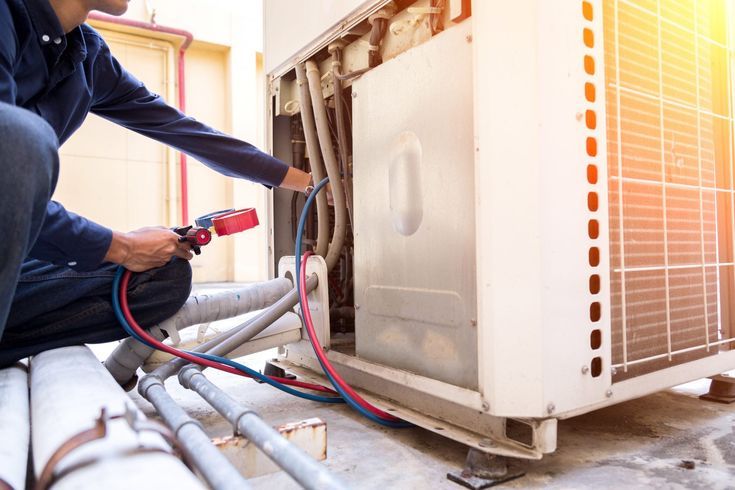
When your AC stops cooling properly in Dubai especially between May and September, when outdoor temperatures regularly exceed 45°C — it is not a minor inconvenience. It is an urgent home maintenance problem that affects health, sleep, and in some cases the safety of vulnerable family members.
Yet the most common response from Dubai residents is to wait. They assume it is a temporary issue, that the AC just needs time, or that calling a technician will be expensive and complicated. They wait for two days in 38°C indoor heat before making the call.
This guide exists to help you skip that delay. It explains the ten most common reasons an AC stops cooling properly in Dubai, what you can safely check yourself right now, what needs a qualified AC technician, and what you should realistically expect to pay for each type of repair.
First: What “Not Cooling Properly” Actually Means
Before diagnosing, it helps to define the problem precisely, because different symptoms point to different causes:
Running but blowing warm or room-temperature air — the unit is operating but producing no cooling effect at all.
Cooling weakly or inconsistently — the unit is producing some cool air but the room is not reaching the set temperature, even after running for an hour or more.
Cooling one part of the room but not others — uneven airflow, usually related to blocked vents or inadequate air distribution.
Cooling normally but then stopping — the unit trips off, restarts, and the cycle repeats.
Unit turns on but shuts down quickly — brief operation followed by shutdown, sometimes with an error code on the display.
Each of these patterns suggests different underlying causes. Note which one matches your situation before reading through the causes below — it will help you narrow down the diagnosis faster.
The 10 Most Common Causes of an AC Not Cooling in Dubai
Cause 1: Dirty or Blocked Air Filters
This is the single most common cause of reduced AC cooling in Dubai — and the only one on this list you can fix yourself in ten minutes without calling anyone.
Every split AC unit draws indoor air through a return air grille, passes it over the evaporator coil to cool it, and blows it back into the room. The filter sits in the return air path and captures dust, hair, and particulate matter before they reach the coil.
In Dubai’s dusty environment, AC filters need cleaning significantly more often than manufacturers typically recommend for other climates. A filter that is completely blocked restricts airflow so severely that the evaporator coil cannot transfer heat properly. The result is warm or weakly cooled air, and sometimes the coil icing up and shutting the unit down.
Check it now: Open the front panel of your indoor unit (most slide up or have clips) and remove the filter. Hold it up to a light. If you cannot see through it, it is blocked.
Fix: Wash the filter with water, shake off excess, allow to dry fully, and reinstall. This takes 15–20 minutes. If your AC then starts cooling normally, the filter was the problem.
How often to clean in Dubai: Every 3–4 weeks during heavy use periods. This is the tenant’s responsibility under standard Dubai tenancy agreements.
Cause 2: Blocked or Dirty Evaporator Coil
If cleaning the filter helps but the AC still underperforms, or if the filter was already clean, the next suspect is the evaporator coil — the finned aluminium coil inside the indoor unit over which indoor air passes to be cooled.
Over months of use, dust, mould, and debris accumulate on the coil fins, reducing heat transfer efficiency. In humid conditions, biological growth on the coil surface is common. A heavily fouled evaporator coil may reduce cooling capacity by 20–40% even with a clean filter.
Symptoms: Reduced cooling with a clean filter. Musty or sour smell when the AC runs — a reliable sign of biological growth on the coil. Ice forming on the coil or on the pipe exiting the indoor unit.
Fix: Professional coil cleaning — a technician removes the front cover, applies coil cleaner, and flushes the coil. This is part of a standard AC service and costs AED 150–300 depending on unit size.
Cause 3: Low Refrigerant (Gas) Level
The refrigerant — commonly called “gas” in Dubai — is the substance that actually moves heat from inside your home to the outdoor unit. If the refrigerant level drops, the system loses cooling capacity proportionally.
Refrigerant levels drop because of leaks. An AC system is a sealed circuit — refrigerant does not get “used up” the way fuel does. If your system is low on gas, there is a leak somewhere in the refrigerant circuit, and that leak needs to be found and repaired before topping up the gas.
Symptoms: AC running continuously but never reaching the set temperature. Outdoor unit running but indoor unit blowing weakly cooled air. Ice forming on the refrigerant lines.
Fix: A licensed AC technician needs to assess the refrigerant pressure, identify any leaks (UV dye test or electronic leak detector), repair the leak, and then recharge the system to the correct pressure. Simply topping up gas without fixing the leak means the gas will escape again within weeks or months.
Cost in Dubai: AC gas top-up (R32 or R410A) ranges from AED 250–600 depending on the refrigerant type and how much is needed. Leak repair adds AED 200–800 depending on the location of the leak.
Cause 4: Blocked or Dirty Condenser Coil
Your outdoor unit contains the condenser coil — where the heat extracted from your home is released to the outside air. In Dubai, outdoor units are exposed to dust, sand, and in villa locations, leaves and debris. When the condenser coil is blocked, it cannot release heat efficiently, and the system’s cooling capacity drops.
This is particularly common during and after sandstorms, and in units installed in confined locations with poor airflow — narrow side passages, enclosed balcony cabinets, or against walls with inadequate clearance.
Symptoms: AC cooling less effectively during hot weather even when it worked fine earlier. Outdoor unit running at high noise levels. Error codes on the display (high pressure faults).
Fix: Outdoor coil cleaning — a technician cleans the coil fins with a hose and coil cleaner. This is part of a full AC service and should be done at least once a year in Dubai. If the outdoor unit is installed in a location with poor airflow, repositioning or improving the installation may also be necessary.
Cause 5: Frozen Evaporator Coil
A frozen coil is not a stand-alone cause — it is the result of another problem. The two most common causes of coil icing in Dubai are blocked airflow (dirty filter or coil) and low refrigerant.
When the coil freezes, it becomes encased in ice that further restricts airflow, causing the unit to blow room-temperature or slightly cool air. Eventually the unit may shut down entirely.
Symptoms: Indoor unit blowing barely cool air. Ice visible on the indoor unit or on the refrigerant pipes leading to it. Water dripping from the indoor unit as the ice melts.
Fix: Turn the AC off (or to fan-only mode) and allow the ice to melt fully — this takes 1–4 hours. Then address the underlying cause: clean the filter, have the coil cleaned, or have the refrigerant level checked. Never continue running a frozen unit as this can damage the compressor.
Cause 6: AC Compressor Problems
The compressor is the heart of the AC system — the component in the outdoor unit that pressurises the refrigerant and drives the cooling cycle. Compressor problems are the most serious and expensive AC failure.
Compressors fail from age, loss of refrigerant (which also lubricates the compressor), electrical faults, or overheating (often due to blocked condenser coils or inadequate outdoor unit ventilation). In Dubai’s climate, outdoor units are under significant thermal stress during summer.
Symptoms: AC running with no cooling whatsoever — the unit operates but the outdoor unit compressor does not run or runs erratically. Loud clicking, banging, or rattling from the outdoor unit. Unit trips the circuit breaker when turned on.
Fix: Compressor diagnosis and replacement if necessary. Compressor replacement is a major repair:
- Small split unit (9,000–12,000 BTU): AED 1,200–2,500 for compressor replacement
- Medium unit (18,000–24,000 BTU): AED 2,000–4,000
- Large unit (36,000+ BTU): AED 3,500–7,000+
Before replacing a compressor, a qualified technician should check whether replacement is economic versus replacing the full unit, particularly for older systems.
Cause 7: Blocked Condensate Drain Line
Every AC unit produces water as a by-product of the cooling process — condensation forms on the cold evaporator coil and drips into a collection tray, from which it is removed through a drain line.
In Dubai, drain lines frequently block from algae growth, dust accumulation, and poor installation slope. When the drain line blocks, the collection tray overflows. Most modern units have a float switch that shuts the unit down when the tray overflows — to prevent water damage.
Symptoms: AC trips off after running for a while and cannot restart. Water dripping from the indoor unit or staining the wall below it. Error code related to drainage on the display.
Fix: A technician clears the drain line — typically by vacuum suction or pressurised air — and checks the installation slope. Algaecide tablets placed in the tray during an annual service prevent regrowth. This is a simple repair costing AED 100–200.
Why this matters beyond cooling: A blocked drain line is not just an AC problem. The overflow water that comes from an undetected blocked drain saturates the wall or ceiling around the indoor unit — causing paint peeling, plaster damage, and potential false ceiling damage. The maintenance connection between AC servicing and home fabric condition is direct.
Cause 8: Electrical Faults
AC units contain electrical components that fail over time — particularly the capacitors that start and run the fan and compressor motors, and the PCB (printed circuit board) that controls the unit’s functions.
Capacitor failure is extremely common in Dubai’s heat. Capacitors are heat-sensitive components, and outdoor units in summer experience ambient temperatures far above their rated operating conditions.
Symptoms of capacitor failure: Unit hums but the compressor or fan does not start. Fan motor running slowly or erratically. Unit clicking on and off repeatedly.
Symptoms of PCB failure: Control panel not responding. Unusual error codes that persist after basic troubleshooting. Specific functions (timer, mode selection) not working while the unit partially operates.
Fix: Capacitor replacement is one of the least expensive AC repairs — AED 150–400 including the component and labour. PCB replacement is more expensive: AED 600–2,500 depending on the unit brand and model.
Cause 9: Undersized AC for the Space
This cause is not a fault or failure — it is an installation mismatch. If your AC unit is too small for the room it serves, it will run continuously and never reach the set temperature, even when functioning perfectly.
In Dubai, this is common in:
- Rooms where external walls or windows have been changed (larger openings, thinner glazing)
- Rooms that have been combined by removing a partition wall
- Apartments where additional appliances (large TVs, servers, extra people) significantly increase heat load
- Villas where the original HVAC design was inadequate
Symptoms: AC runs continuously, room temperature drops but never reaches the setpoint, electric bills are high, the AC blows cold but the room remains warm.
Fix: Proper heat load calculation and either replacing the unit with an appropriately sized one or adding supplementary cooling for the space.
Cause 10: Thermostat or Remote Control Issues
Sometimes the simplest explanation is correct. If the thermostat or remote control is malfunctioning, the AC may be receiving incorrect commands — running in fan-only mode instead of cooling mode, set to a higher temperature than displayed, or failing to communicate with the unit at all.
Check: Ensure the mode is set to “Cool” (not “Fan” or “Dry”). Check the set temperature — if it is at 28°C or above on a hot day, the unit is working correctly and the room simply will not cool further. Replace the remote batteries. Try the buttons on the indoor unit directly.
If the remote works but the display on the unit does not respond: PCB or receiver board issue. Needs a technician.
What You Can Check Yourself — Right Now
Before calling anyone, work through this quick checklist:
Filter check — Open the indoor unit, remove and inspect the filter. Wash it if dirty.
Mode check — Confirm the remote is set to COOL mode, not FAN or DRY.
Temperature setting — Make sure the set temperature is actually lower than the current room temperature.
Remote batteries — Replace them. A weak remote signal causes inconsistent operation.
Outdoor unit check — Go outside and confirm the outdoor unit fan is spinning. If it is not, that is significant information for the technician.
Drainage — Check if water is dripping from the indoor unit. If yes, drainage is likely blocked.
Circuit breaker — Check your electrical board. A tripped breaker will prevent the outdoor unit from running even when the indoor unit appears to operate.
If you have gone through this list and the problem persists, you need a technician.
What to Tell the Technician When You Call
The more information you can provide when booking, the faster the technician can diagnose on arrival:
- Unit brand and model (on the sticker on the indoor unit)
- What the unit is doing: blowing warm air / tripping off / not starting / other
- How long the problem has been occurring
- When the unit was last serviced
- Whether there is any unusual noise from the indoor or outdoor unit
- Whether you see ice on the unit or water dripping
AC Repair Costs in Dubai 2026: What to Expect
| Issue | Typical Cost (AED) |
|---|---|
| Filter cleaning (DIY) | Free |
| Standard AC service (coil clean, drain, check) | AED 180–350 |
| Gas top-up (refrigerant recharge) | AED 250–600 |
| Leak detection + repair | AED 200–800 |
| Capacitor replacement | AED 150–400 |
| PCB / control board | AED 600–2,500 |
| Compressor replacement (small unit) | AED 1,200–2,500 |
| Compressor replacement (large unit) | AED 3,500–7,000+ |
| Full unit replacement (1.5 ton split) | AED 2,500–5,000 supplied and installed |
Frequently Asked Questions: AC Not Cooling in Dubai
Q: Why does my AC work well at night but not during the day in Dubai?
This is almost always an outdoor heat load problem. During peak afternoon hours — roughly 1pm to 6pm in Dubai summer — outdoor temperatures are at their highest, which reduces the efficiency of the condenser. If the outdoor unit’s condenser coil is partially blocked (reducing heat rejection) or if the unit is installed in a poorly ventilated location, this daytime performance drop can be dramatic. A full AC service including outdoor coil cleaning and checking the installation clearance will usually resolve this.
Q: How long should an AC take to cool a room in Dubai?
A correctly sized and properly functioning split AC should lower a room temperature by 4–8°C within 20–30 minutes, and reach the set temperature within 45–60 minutes on a very hot day. If it takes significantly longer — or never reaches the setpoint despite running for hours — either the unit is undersized, there is a performance issue, or there is unusual heat gain in the room (poorly sealed windows, direct unshaded sun on glass, heat sources inside).
Q: Is it cheaper to repair or replace my old AC in Dubai?
The general guidance is: if the repair cost exceeds 40–50% of a new unit’s installed cost, replacement is typically the better investment. In Dubai, new 1-ton split AC units can be supplied and installed for AED 2,200–3,500, and 1.5-ton units for AED 2,500–5,000. If you are facing a compressor replacement on a unit that is 8+ years old, a new unit with a warranty often makes more economic sense.
Q: How often should I service my AC in Dubai?
Twice a year is the standard recommendation for Dubai — once before summer (April) and once after (October/November). This schedule accounts for the heavy demand during peak summer and ensures the system enters the off-peak period in good condition. Annual servicing is the minimum; twice yearly is best practice for Dubai’s usage levels.
Q: Can a dirty AC cause health problems?
Yes. Biological growth — mould, bacteria, and dust mite accumulation — on evaporator coils and in drain pans is circulated through your home’s air when the AC runs. This is a genuine air quality concern, particularly for people with respiratory conditions, allergies, or young children. The musty smell that some Dubai residents notice when their AC first starts is a direct indication of biological growth in the system. Annual AC servicing that includes coil sanitisation addresses this.
Get Your AC Repaired Today
Total Home Fixing provides same-day AC repair and maintenance across all Dubai areas. Our AC technicians carry the most common replacement parts — capacitors, drain pumps, filters — on every vehicle, which means most repairs can be completed on the first visit without a return trip.
We provide a written quote before starting any repair, and our emergency line is available 24/7 for AC failures during Dubai’s summer months.
📞 Call or WhatsApp: +971 52 688 4258 🌐 totalhomefixing.ae/booking 📍 Salsbeel Building, Office 104, Al Muteena Street, Deira, Dubai 🕐 Monday – Saturday, 8am – 8pm | Emergency line 24/7